Patenture. Commercialization for security, identity, and trust technology.
Your patent tells you what you own.It does not tell you who pays, what for, or how to reach them.Patenture answers that.
From granted patent to new revenue.
Patenture turns a granted patent into a product someone can picture, a market answer someone will pay for, and the licensees and partners who fit. Every read is delivered in writing, with the evidence graded.
Named product, mapped to claims
Illustrative
- 100Credential moduleThe named product
- 102Secure elementClaim 1, element (a)
- 104Credential storeClaim 1, element (b)
- 106Policy controllerClaim 1, element (c)
- 108Host interfaceClaim 3
- 110Short-range radioClaim 5
- 112Verified identity, deliveredWhat the buyer pays for
Where you start
Four situations. Each starts with a read.
Built for security, identity, and trust technology: hardware security, cryptography, identity and access, payments and fraud, and regulated markets.
No pitch yet
Granted patent, real engineering, no product anyone can pitch.
The Patent to Product Read names the product, maps it to the claims, and writes the deck your CEO presents without the inventor in the room.
Patent to Product ReadNo market answer yet
Claims, and no answer yet on who pays.
The Claim to Market Read tells you which use cases your claims reach and which of them anyone will pay for, in writing.
Claim to Market ReadAlready in market
Your product uses the patent. Your claims reach further.
The Licensing Reach Read finds licensees in markets you will never enter and screens each one against your own customers first.
Licensing Reach ReadMarket already known
You know who needs it. We get you in the room.
The Mandate Review tests the thesis in about a week. The mandate packages the patent and runs it to a term sheet.
Mandate ReviewWhat you receive
Named deliverables, not a promise.
Every deliverable carries an evidence grade: Confirmed, Verbal, or Inferred.
Named Product Family (components mapped to claims)
A product name, the components inside it, and a map from each component to the claim that covers it. It answers what the thing is. Your executives use these names in every conversation that follows.
Executive Opener Deck
A pitch deck the CEO can present without the inventor in the room, built from the explainer, the use cases, and the renders. It answers what we say to investors and partners next quarter. It is what your executives take into the room.
Use-Case Inventory (scored and tiered, bottom tier killed in writing)
Every candidate use case scored on a fixed rubric and tiered, with the bottom tier killed in writing and the reason given. It answers which uses your claims actually reach and which anyone will pay for. You stop pitching the ones that failed.
Honest Moat Read (one page)
One page on what the claims protect, what they do not, and how an incumbent would respond. It answers whether the advantage holds. A board trusts it because it marks its own weak points.
Ranked Licensee Ladder
The companies that fit each opportunity, ranked and validated with the people who would sign. It answers who to call first. The Licensing Program works it top to bottom.
Written Yes or No
A plain answer on whether the thesis holds and whether Patenture takes the mandate, with the reasons. It answers whether to proceed. A no is a finished deliverable.
What a report cannot do
Anyone can research a market now. Patenture validates the answer with the people who would buy it, opens the doors to the licensees and buyers who fit, helps you pitch it to your board, and stands up the go-to-market that follows.
Research is a commodity now. A founder with a frontier model can produce a market report in an afternoon. What that report cannot do is discreetly validate its assumptions with the industry experts who would buy or license the technology, connect the company with high-fit early licensees for a fast path to revenue, help pitch the investors in a boardroom, or stand up the go-to-market operation and help make the first hires.
The operator
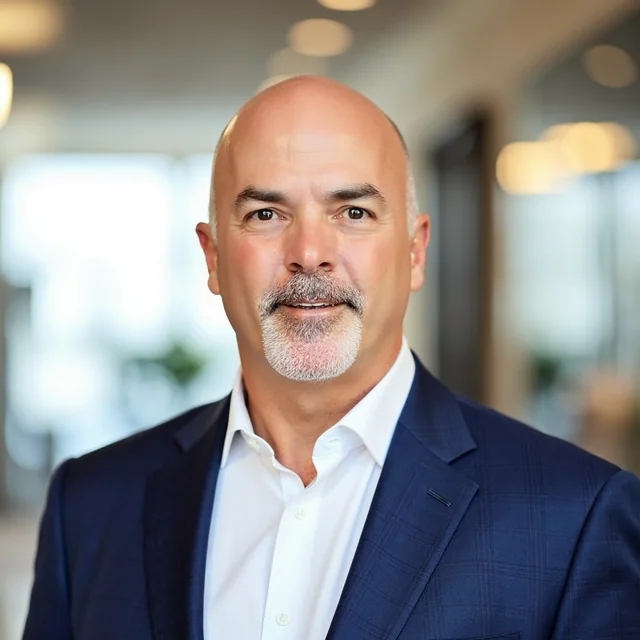
Judgment from a career spent selling this technology.
Mike Dayton has led go-to-market for B2B software and hardware for 25 years, across identity and hardware security, payments and fraud, financial applications, and secure messaging.
He has pitched employers' patent portfolios to strategic acquirers and licensees, and defined a product from a patent for a company that had nobody to do it.
He founded, bootstrapped, and sold a company of his own.
The network
The people who would buy it, license it, or certify it.
Every engagement draws on global OEM, channel, and thought-leadership relationships in identity, security, payments, and secure messaging, built over 25 years of selling with and through them; prosecution counsel relationships for the claim questions; specialist partners for renders and regulatory gates; and accelerator and transition-program relationships.
Every engagement starts with a mutual NDA and a written data-handling annex your counsel can review before intake. How confidentiality works.
Twenty minutes tells you which read fits.
Bring the patent number and what you are being asked for right now. You get a plain answer on which read fits, or whether none does yet.